
Understanding Container Home Prices Across the U.S.: A State-by-State Guide
From $8,500 in Florida to $214,000 in Utah, container home prices vary widely. Check out state-specific insights to help you choose wisely.

Nomad Adjacent3 months ago
Published under the Nomad Adjacent masthead. This guide was produced with AI assistance and is bylined to the company rather than an individual writer — we don’t attach invented author names to it. Read our editorial standards, or email us to request a correction.
The Basics of Container Homes and Their Appeal
Here's the thing: container homes aren't just about living in a metal box. They're affordable, sustainable, and offer a blank canvas ripe for customization. With an average cost of $72,946, container homes are easier on the wallet compared to traditional houses. That's less than the price of some new trucks, and, you know, you actually get to live in it.
Container homes are essentially converted shipping containers used as living spaces. They bring a fresh twist to the housing market, offering sustainability through the reuse of materials. The appeal doesn't stop there. The customization possibilities are endless, allowing you to tailor your home to your exact needs, whether you're in bustling California or the quiet stretches of Utah.
From an environmental standpoint, container homes tick the right boxes. According to the EPA, using existing materials like shipping containers helps reduce the carbon footprint associated with new home construction. This blend of affordability and eco-friendliness makes container homes an appealing option for the eco-conscious and budget-minded alike.
Price Variations by State: A Closer Look
When it comes to container home pricing, geography plays a crucial role. Look at California, where prices range from $18,900 to $159,957. Across state lines in Utah, prices shoot up to a staggering $214,000. The average price in Utah? A hefty $113,857. What gives?
The disparity often boils down to local factors like land costs, building codes, and permitting processes. States with stricter building regulations, like those outlined by the IRC codes and HUD guidelines, tend to have higher prices. On the flip side, Florida offers some of the most affordable options, with prices starting at just $8,500.
Understanding these geographical nuances can save you a headache (and a chunk of change) when choosing where to buy. For instance, Alabama's average price of $105,625 reflects its stringent building codes and higher demand for sustainable housing options. Figuring out these state-specific conditions is key to finding a container home that meets both your budget and lifestyle needs.
Type Matters: Comparing Different Container Home Designs
Not all container homes are created equal. The type and design significantly impact the cost. Take a standard Container House: it averages at $95,000, which is higher than a typical Tiny House priced around $76,945. What's the difference?
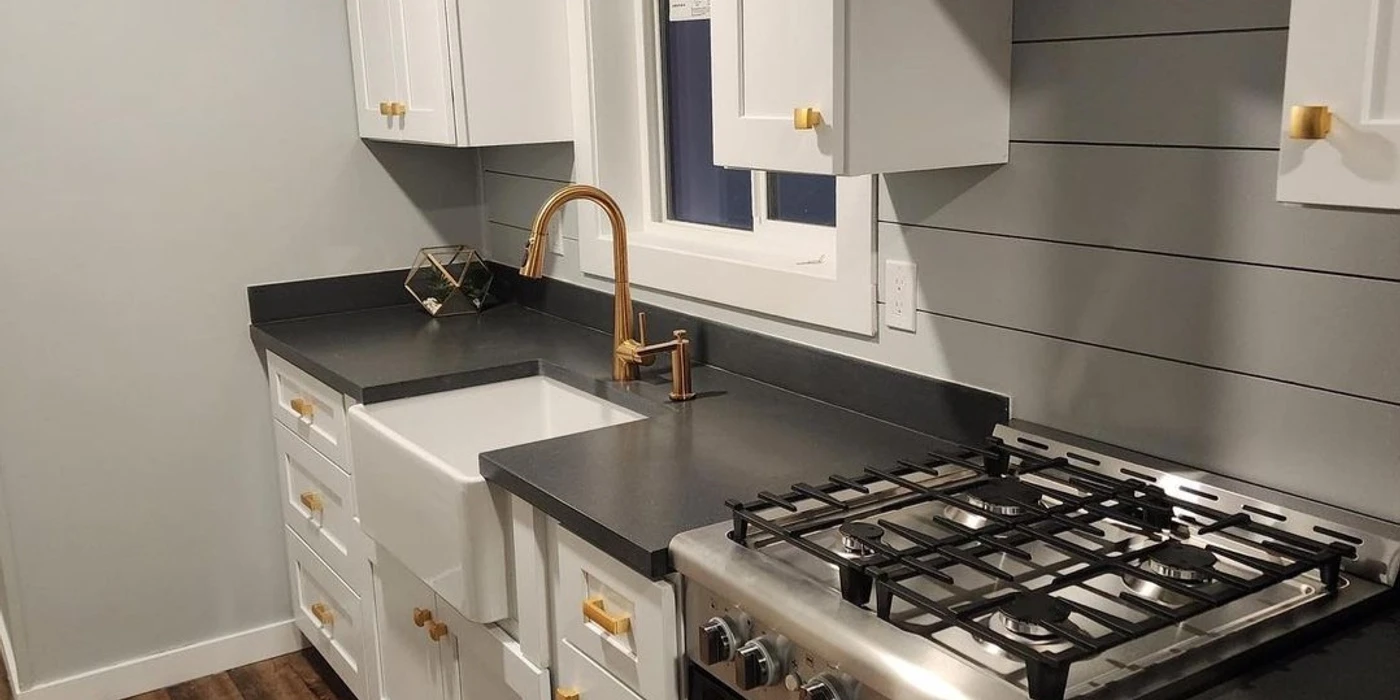
Consider the Ark's Beautiful Atlantic Model in Heber, Utah. This model is loaded with luxury finishes like seamless Corian countertops and a 24-inch gas stove, offering a touch of class for $95,000. It's a testament to how design and features—like spray foam insulation and a mini-split system—dramatically influence pricing.
Additional features such as faux beams and accent walls not only enhance aesthetic appeal but also drive up the cost. If you're comparing builders, knowing what you're paying for can help balance your budget with your home aspirations.
The Role of Customization and Upgrades
Customization can turn a standard container into a personalized hotspot, but it comes at a price. Features like Corian countertops and sophisticated HVAC systems, as seen in high-end models, can add significant value—and cost.
In Texas, where container homes range from $28,900 to $115,000, custom features can fit a wide spectrum of budgets. Opt for energy-efficient upgrades like closed-cell spray foam insulation to enhance comfort without breaking the bank. Such customizations, while initially pricey, might save you on utility bills in the long run.
When planning your container home, prioritize upgrades that align with your lifestyle and financial plan. The key is to balance your desire for luxury with your budget constraints, ensuring you end up with a home that's perfect for you.
Figuring out the Buying Process: What to Expect
Jumping into the world of container homes can be daunting. Start by browsing available listings to understand what fits your style and budget. The average buyer might spend anywhere from a few weeks to several months in this initial phase.
Financing is another hurdle. Many lenders, guided by Fannie Mae and other guidelines, view container homes as unconventional, which can complicate securing a mortgage. It's crucial to seek out lenders familiar with these properties.
Alongside financial considerations, local zoning laws and building permits can drastically affect your buying process. Each state—and often each county—has its own set of regulations, making research essential before purchase.

Comparing Container Home Listings: Getting the Most Bang for Your Buck
Let's get into the nitty-gritty of specific listings to see what you can expect at different price points. Take, for instance, the Ark's Beautiful Atlantic Model in Heber, Utah. At $95,000, it offers a single bedroom, a bathroom, and a spacious 1,049 sq ft layout. The luxury doesn't stop at space; it's decked out with Corian countertops, faux beams, and high-efficiency appliances. This model is all about high-end finishes and utilities like a 12000 BTU mini-split air conditioning system, making it a solid choice if you're after both comfort and style.
Compare that to a more budget-friendly option in Florida, where container homes start at a mere $8,500. Granted, these are typically smaller, with fewer luxury amenities, but they offer a compelling entry point into container living. Given Florida's average price of $54,294, you can find some excellent middle-ground options that balance cost with livability. So, whether you're splurging on a Utah luxury model or starting small in Florida, know that each listing presents a unique set of trade-offs in terms of price, size, and features.
Practical Buying Advice: Making Cents of Your Container Home Investment
Financing a container home can be a headache if you're not prepared. While options exist, many traditional lenders find these unconventional dwellings harder to classify under standard mortgage rules. It's vital to seek lenders familiar with alternative housing, possibly those highlighted by Fannie Mae guidelines. Allocate your budget wisely—set aside at least 15-20% of your total budget for unexpected costs like zoning adjustments or sudden repairs.
Keep in mind the hidden costs associated with land preparation, utility hookups, and potential renovations. An initial low price might seem enticing, but once you factor in the essentials, your budget should account for all these add-ons. For those eyeing warmer states, Florida’s cost-effective options might allow more room in your budget for such expenses. If you're still unsure, browsing all available listings can offer a clearer picture of what's feasible within your financial framework.
Evaluating Container Homes: What to Inspect Before Saying Yes
Before you look into purchasing, it's crucial to know what to scrutinize during a home evaluation. First, examine the container's integrity. Look for rust, structural weaknesses, or any signs of wear that might compromise the home's safety. Consider how well the container is insulated, especially if it's located in environments with extreme weather conditions. The 3 inches of Closed Cell Spray Foam in the Atlantic Model, for instance, might be a lifesaver in harsher climates.
Another must-have is a thorough inspection of utilities and hardware. Ensure that all appliances, wiring, and plumbing are up to code and in working order. The last thing you need is a surprise plumbing overhaul. If possible, bring along a professional inspector who is familiar with container homes to catch things you might miss. Want more buying tips? Check out our latest articles for up-to-date advice on evaluating alternative homes.
Future Trends in Container Home Living
The container home market is buzzing. As demand for alternative housing explodes, so does innovation. Technologies like smart home systems and sustainable materials are becoming the norm, poised to reshape what we expect from these homes.
Currently, container homes are a small but growing part of the broader tiny living movement. As trends shift towards minimalism, expect container prices and designs to evolve accordingly—potentially rising as they incorporate more high-tech features.
Staying on top of these trends is crucial. Whether you're investing in a container home as a first-time buyer or adding to an existing portfolio, understanding market dynamics can lead to smarter, more secure purchases.
Closing Thoughts
Container homes are more than just a trend; they're a practical, flexible solution for modern living. As you navigate this market, remember: knowledge is power. From understanding regional pricing quirks to weighing customization options, informed decisions will lead to the container home of your dreams. Whether you're eyeing a luxury model in Utah or a starter home in Florida, the possibilities are vast. The key is to align your investment with your lifestyle and budget, ensuring a home that suits your needs both today and tomorrow.