Tiny Home Delivery FAQs Answered
Everything you need to plan tiny home delivery: shipping methods, costs, timelines, site prep, permits, and insurance for a smooth setup.

Updated
Published under the Nomad Adjacent masthead. This guide was produced with AI assistance and is bylined to the company rather than an individual writer — we don’t attach invented author names to it. Read our editorial standards, or email us to request a correction.
Tiny Home Delivery FAQs Answered
Deliverying a prefab tiny home might feel overwhelming, but it doesn’t have to be. Here’s what you need to know:
- Shipping options: Homes can arrive as flat-packed kits, modular sections, or fully assembled units. Each format impacts costs, timelines, and site prep needs.
- Delivery types: Choose between curbside drop-off, on-site placement, or terminal pickup, depending on your budget and property access.
- Timelines: Production can take 8–20 weeks or more, depending on customization and permitting. Transit adds 1–10 days based on distance.
- Costs: Delivery fees vary by distance, home size, permits, and site conditions. Budget for extras like cranes or re-delivery if your site isn’t ready.
- Site prep: Ensure clear access, a stable foundation, and utility hookups before delivery to avoid delays or added fees.
Proper planning ensures a smooth delivery process, so confirm details with your builder and transport company early.
Tiny Home Delivery & Setup
How Prefab Tiny Homes Are Shipped
Getting your tiny home from the factory to your property depends on its design, how it’s packaged, and how much you're ready to handle on-site. Manufacturers offer different shipping methods based on these factors, which also determine how you’ll need to prepare.
Shipping Formats and Methods
Prefab tiny homes typically ship in one of three ways: flat-packed panels, modular sections, or fully assembled units. Each option comes with its own set of advantages, depending on your needs.
- Flat-packed kits: These arrive as bundles of wall panels, framing lumber, roofing materials, and hardware, all neatly stacked on flatbed trucks. This format is ideal for DIY enthusiasts or properties with limited access since the individual components can be moved with standard tools. However, it requires more on-site effort, usually one to two days of assembly with a crew. On the plus side, the risk of damage during transit is spread across smaller pieces.
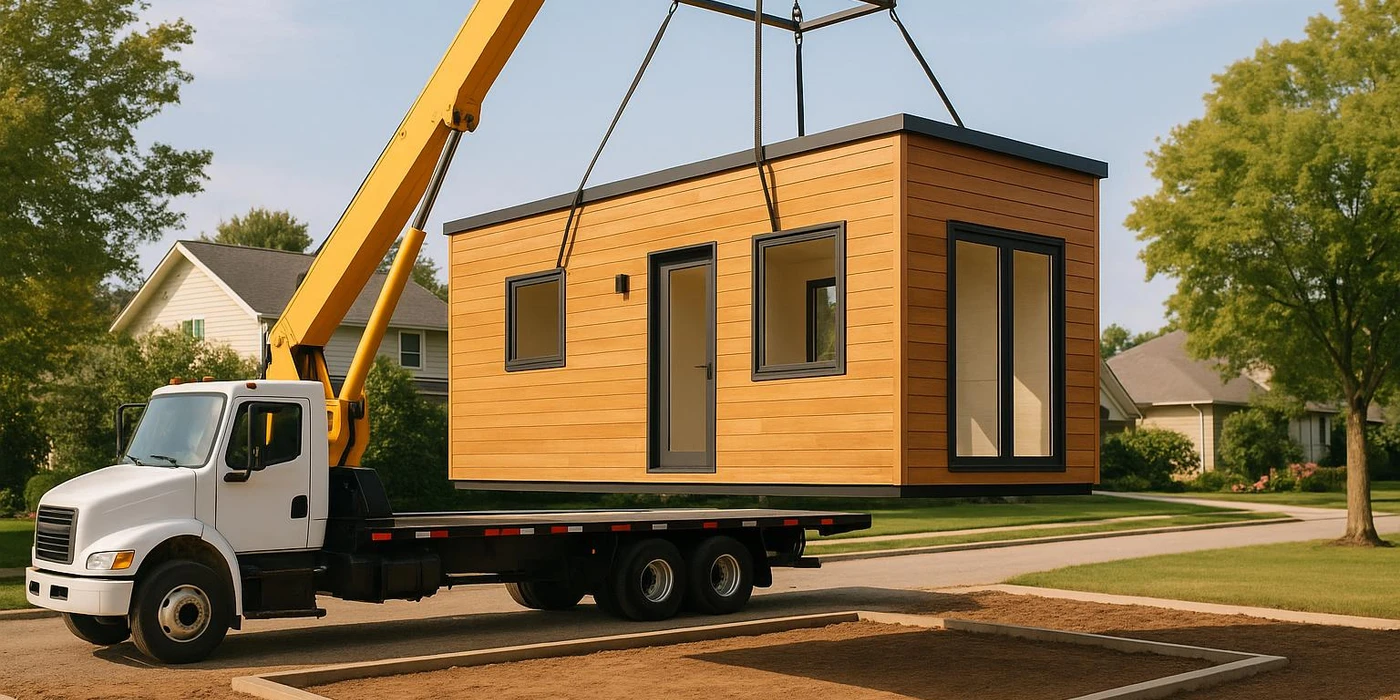
- Modular sections: These are larger, pre-built parts of the home that are transported separately and joined on-site. Assembly often requires a crane or other specialized equipment, especially for complex designs. This method reduces exposure to weather since much of the work is done in a controlled factory setting. However, you’ll need enough space for multiple trucks and possibly crane operations.
- Fully assembled units: These are complete homes built on a road-legal chassis or trailer frame. They’re delivered in one piece and ready to use, making them perfect for tiny homes on wheels or park-model cabins. Because the entire home is transported as a single unit, carriers take extra care with securing and routing. This method works best when your property has direct, clear access without tight turns or steep inclines.
Most tiny homes are delivered by semi-trucks, which are efficient for long distances and can carry larger modules or multiple materials. However, they require at least 16 feet of clearance and a wide turning radius, which can be challenging on narrow roads or steep driveways. For more flexibility in navigating tight spaces, gooseneck trailers pulled by heavy-duty pickup trucks are a better choice, especially for urban lots or mountain properties.
In some cases, specialized transport rigs are used. These rigs combine long-haul capabilities with on-site positioning services, using hydraulic trailers or cranes to place the home exactly where it needs to be. If you need this service, it’s best to book it well ahead of time.
Transport companies often request photos or videos of your property’s access route, including driveway measurements and overhead clearances. Some even offer a paid “lot check,” where they visit your site to identify potential obstacles like soft ground, tight turns, or low-hanging branches. Walking the delivery path yourself beforehand can help you address issues like trimming trees or widening driveways before the big day.
Once the shipping format is chosen, the delivery type will determine how your home is positioned on your property.
Delivery Types Explained
The delivery method you select shapes what happens when your tiny home arrives. From basic drop-offs to full placement services, the choice depends on your access route and foundation setup.
- Curbside delivery: This is the most budget-friendly option but requires more effort on your part. The home is dropped off at a safe access point, and you’ll need equipment like a forklift or skid steer - or local labor - to move it to your building site. This works well if you have clear access and a team ready to help.
- On-site delivery and placement: This service includes transporting the home down your driveway or access lane and using specialized equipment to set it directly on your foundation, piers, or blocking. For single-piece homes, haulers might use a roll-off or hydraulic trailer to slide the structure into place. On trickier sites, cranes can lift the home over obstacles like trees or fences. While this option costs more, it saves you the hassle of coordinating equipment and labor, especially for challenging properties.
- Terminal delivery: In this less common option, you pick up your tiny home kit or unit from a freight terminal instead of having it delivered. This can be a good choice if you have your own hauling equipment.
The right delivery type depends on your property’s layout, budget, and how comfortable you are managing logistics. For example, a long, winding driveway with low-hanging branches might require full on-site delivery with a crane. On the other hand, if your site is easily accessible and you’ve got help lined up, curbside delivery can save you money while still getting the job done efficiently.
Delivery Timelines
When it comes to delivery, there are two key phases to consider: production and transit. Understanding the timeline for each phase can help you avoid unnecessary delays.
Order to Shipment Lead Times
From the moment you sign a contract to the day your tiny home leaves the factory, the timeline usually falls between 8 and 20 weeks. However, this can stretch significantly longer depending on various factors. Interestingly, most delays happen before production even begins.
Builders schedule production in specific slots, and during peak seasons, you might wait 4 to 6 months just to get started, even though the actual construction only takes 4 to 6 weeks. Standard kits are typically ready to ship within 4 to 8 weeks after a production slot opens, while custom designs may take longer due to the need for additional engineering or special-order materials.
Permitting is often the most unpredictable part of the process. Many builders won’t begin production or schedule a shipment until you’ve secured all necessary permits. Depending on your location, the permit review process - including modular plan approvals in some states - can add 4 to 12 weeks or more to your timeline.
During the production phase, there are several key milestones to track: design confirmation, engineering approval, permit validation, assignment of your production window, mid-production updates, and a final quality inspection before your home is released for delivery. Staying informed about these milestones allows you to plan parallel tasks, like preparing your site with foundation work and utility trenching, so everything is ready when your home arrives.
To avoid delays, stay in regular contact with your builder and finalize design decisions as quickly as possible. Applying for permits early - right after signing your contract, if possible - can save valuable time. Some buyers also align their site preparation with the factory build schedule, which can reduce the overall time from order to move-in.
Once production wraps up, the focus shifts to transit logistics.
Transit Time and Regional Factors
With your home completed, the next step is delivery. Transit times are generally predictable. For local deliveries - within 300 to 500 miles - the process typically takes 1 to 3 days, covering loading, transport, and unloading. Longer trips, like coast-to-coast hauls, are scheduled for 5 to 10 days door to door. Drivers account for daylight travel, mandatory breaks, and restrictions on oversize loads, which can limit daily mileage.
Where you live plays a big role in delivery planning. Urban areas often require careful coordination due to traffic regulations and limited delivery windows. Meanwhile, rural sites might need specialized equipment to navigate narrow roads or challenging terrain. To avoid surprises, carriers usually request photos or videos of your access route, including driveway dimensions and overhead clearances.
Weather can also throw a wrench in delivery plans. Heavy snow, hurricanes, or other extreme conditions may cause delays, while shorter daylight hours in winter can limit driving time for oversize loads.
Additional factors like oversize permits and carrier availability can further impact scheduling. Many states require permits, pilot vehicles, or pre-approved routes for transporting tiny homes. Processing these permits can take time, and high-demand periods - such as spring and early summer - may require you to book delivery slots weeks in advance.
To ensure a smooth delivery, make sure your site is fully prepped before the factory sets a target shipping week. This includes completing driveway work, foundation preparation, and utility installations. Being flexible about the exact delivery day also helps, as driver schedules, traffic, and last-minute route changes can shift arrival times.
If you’re looking to reduce wait times, explore inventory options on Nomad Adjacent for quicker availability.
Shipping and Delivery Costs
When it comes to prefab tiny homes, delivery costs can vary widely depending on the project. Most builders treat delivery as a separate expense from the home itself, often partnering with third-party transport companies to handle logistics and provide quotes. Knowing what goes into these quotes - and what factors can drive up costs - can help you plan your budget and avoid surprises.
Components of Delivery Costs
Delivery quotes typically include several key components. The base freight or transport fee is the foundation, covering the truck, driver, and a standard haul over a set distance. Beyond this, you'll encounter additional charges for permits, escorts, route planning, specialized equipment, and on-site labor.
- Oversize permit fees: These vary by state and apply to homes exceeding standard width limits. Wider units or challenging routes often require pilot or escort vehicles, which add a per-mile cost.
- Lot check or site visit fees: Some builders charge for an evaluation of your site’s driveway, slope, and clearance before finalizing a delivery estimate. This fee is usually non-refundable and separate from transport costs.
- Crane or specialty equipment: If your site has steep grades, narrow roads, or other obstacles, you may need a crane or specialized tools to lift the home onto its foundation, which can significantly increase costs.
- Labor and unloading time: Many contracts include a two-hour unloading window. If unloading exceeds this time, additional hourly charges apply. For example, one SIP kit provider notes that trucking companies typically allow two hours for unloading before extra fees kick in.
Delays due to unprepared sites can lead to re-delivery fees, so it’s crucial to ensure your site is ready before the truck arrives.
| Cost Component | What It Covers | When It Applies / Impact on Price |
|---|---|---|
| Base freight / transport | Truck, driver, and standard haul over a set distance | Always; forms the core delivery charge |
| Additional per-mile charges | Extra distance beyond base miles | Longer routes, traffic, or urban congestion |
| Oversize permits | State permits for wide loads | Homes exceeding standard width limits; varies by state |
| Pilot / escort vehicles | Lead or follow vehicles for wide loads | Required for wider units or challenging routes |
| Lot check / site visit | Site inspection for access and feasibility | One-time fee to assess driveway, slope, and clearance |
| Crane / specialty gear | Lifting home from truck to foundation | Needed for sloped or obstructed sites |
| Labor / unloading time | Crew time to unload or position the unit | Exceeds included unloading window; billed hourly |
| Re-delivery / reschedule | Returning if site is not ready | Charged when delivery fails due to unprepared site |
When requesting a quote, make sure to ask for a detailed breakdown that separates charges like base freight, mileage, permits, escorts, equipment, labor, and any additional fees. This transparency allows you to compare quotes and plan accordingly.
Factors That Impact Pricing
Several factors influence delivery costs, and understanding them can help you anticipate the final price. Distance is a primary factor. Most prefab home companies calculate delivery costs on a case-by-case basis, factoring in distance, site access, and any specialized equipment needs. Typically, quotes include a base mobilization fee for the truck and crew, which may cover a set number of miles, followed by a per-mile or per-hour rate for additional distance. Long-distance deliveries may also incur extra charges for oversize permits, pilot cars, or overnight stays for the driver.
Unit size and weight are other critical considerations. Wider homes require oversize permits and often pilot cars. Delivering a tiny home or prefab cabin typically requires about 16 feet of vertical and horizontal clearance, which can affect route planning. This may involve tree trimming or utility coordination, each adding to the total cost. Heavier units may need specialized trailers or additional axles, increasing the base freight fee.
Destination and site access also play a big role. Rural, mountainous, or urban locations with tight access often require additional services like pilot cars, cranes, or extra labor. Urban deliveries may face restricted time windows, traffic delays, or narrow streets, all of which can add hourly charges. Remote areas with steep grades or low-hanging branches may also require crane lifts or route surveys, further increasing costs.
It’s a good idea to confirm the clearance requirements for the loaded home and ensure roads, driveways, and the final approach meet those standards. Providing photos or videos of your access route can help transport companies plan more accurately.
For kit-style tiny homes, which ship as pallets or bundles on flatbed or box trucks, pricing works differently. Shipping is often based on freight weight or truckload, with additional fees for liftgate service, off-loading equipment, or extended unloading times. Buyers are responsible for arranging equipment and labor to unload safely and quickly, as delays can incur penalties.
To avoid surprises, budget a contingency fund - around 10–20% of the quoted delivery cost - for unexpected expenses like tree trimming, soft ground requiring mats, or last-minute crane rentals. Clarify how long the driver or crew will wait on-site before overtime charges apply, and ensure you have enough workers and equipment ready to unload within the included time window.
Finally, check whether setup services - like blocking, leveling, or tie-downs - are part of the delivery cost or billed separately. Some builders may have warranty conditions tied to using their setup crews, so it’s worth confirming the details. Delivery and setup can take a full day or more, and complex moves may extend into a second day, increasing labor and equipment costs.
If you’re buying through marketplaces like Nomad Adjacent, consider opting for a unit closer to your location. Shorter distances and less complicated routes can substantially reduce transport costs.
sbb-itb-718b9e4
Preparing Your Site for Delivery
Getting your site ready for delivery is key to making the process smooth and efficient. Delivering a tiny home often involves large trucks or heavy trailers, which need clear access, stable ground, and adequate turning space. By handling tasks like grading access routes and completing your foundation ahead of time, you can help ensure the delivery crew can position your home safely and on schedule. It's essential to evaluate your site's access, foundation, and utility setup to avoid any hiccups during delivery.
Site Access Requirements
Delivery trucks for tiny homes require more space than you might think. A clear path is necessary, with at least 2 feet of clearance on either side of the home's width and 13 to 16 feet of vertical clearance for overhead obstacles like tree branches or power lines. If your driveway is narrow or has low overhangs, consider trimming branches, widening gates, or removing fencing to accommodate the delivery.
Start by mapping out the route from the main road to your delivery site. Walk or drive this path to identify potential trouble spots, such as sharp corners, low-hanging utilities, or obstacles like sheds. Taking photos or videos of the route can be helpful, especially if your builder offers a professional lot check. Many U.S. builders now provide this service to confirm that access, turning space, and ground conditions are suitable for delivery.
Driveways and approach roads should be level and stable to support heavy equipment. If needed, add compacted gravel or mats to create a solid surface. Clear any obstacles, such as overhanging branches or parked vehicles, to avoid delays on delivery day.
Foundation and Utility Preparation
Your foundation should be fully prepared before the home arrives. Delivery crews will position and level the home on the existing foundation, so tasks like pouring a concrete slab or completing a pier system need to be done in advance. Common foundation options in the U.S. include concrete slabs, pier and beam systems, block foundations, and compacted gravel pads. Concrete slabs provide a permanent base, while pier and beam systems allow for better ventilation and easier access to utilities. Block foundations and gravel pads may also work, depending on local requirements and your home's design.
Once access is secured, shift your focus to the foundation and utilities. Collaborate with a licensed contractor or engineer to ensure your foundation meets the home's specifications. If your site has a slope or other challenges, you might need to create a level area for equipment like cranes.
Utility connections should be planned alongside foundation work. Before delivery day, make sure rough-ins or pre-staged connections for water, sewer (or septic), and electrical services are ready. Typically, these connection points are located within a few feet of where the home will sit, allowing licensed professionals to complete final hookups quickly once the home is in place. Check with your local building department about inspections and ensure all necessary permits, including zoning or land use approvals, are secured well in advance.
What to Expect on Delivery Day
Once your site is prepped and the foundation is ready, the delivery process should run smoothly. Most trucking companies offer a limited unloading or setup window - usually around two hours for a kit - after which additional hourly fees may apply. Having the necessary labor, tools, and equipment on-site can help you stay within this timeframe.
The delivery process begins with the truck positioning the home, either by backing it onto the site or using a crane. On open, level sites, the home can often be slid or rolled onto pre-built supports. If the site has tight access or obstacles, a crane may be needed to lift the home into place. Confirm the delivery method with your team ahead of time to avoid surprises.
Once the home is positioned, the crew will level it using jacks, shims, or blocking and secure it with tie-downs or anchor systems. For modular tiny homes or cabins, the full setup process can take most of the day - and in more complex situations, it might extend into a second day.
Plan to be on-site during delivery to oversee placement and coordinate helpers or equipment as needed. Be sure to clarify with your builder or kit supplier what the delivery crew will handle. Many crews will position and level the structure but won't take care of utility hookups, skirting, or final inspections. If you're receiving a kit-style tiny home, set up a staging area for panels or components to keep the process organized.
If you're purchasing through a marketplace like Nomad Adjacent, carefully review the listing details for transport readiness. Sellers often include information about weight, dimensions, hitch and axle condition, and service history. They may also provide notes on delivery options, recommended foundation types, and utility requirements to help you ensure your site is fully prepared before purchase.
Regulations, Insurance, and Damage Handling
Shipping a tiny home involves navigating regulations, securing the right insurance, and preparing for potential issues during transit.
Oversize Permits
Depending on local and state laws, your tiny home might be classified as an oversize load, which means you'll need special permits. Most transport companies take care of applying for these permits and work with local authorities to ensure compliance. However, if you're handling the move yourself, double-check the specific requirements in your area and secure the necessary permits to avoid any unexpected delays or problems.
Shipping Insurance and Claims
Before shipping, make sure to confirm the transit insurance coverage provided by your transport company. Understanding the details of this coverage is crucial to know what’s protected during the journey. If damage occurs, document it right away and contact your carrier to file a claim.
To better assess potential risks, review the transport history and condition details on Nomad Adjacent. This can also help you decide whether purchasing additional insurance might be a smart move.
Using Nomad Adjacent for Delivery-Ready Listings
If you're in the market for a tiny home that's ready to roll, Nomad Adjacent offers a straightforward way to find pre-built units that are fully transportable. This platform specializes in alternative, movable homes like tiny houses on wheels, modular cabins, container homes, converted vans, and RVs - all designed to be ready for delivery.
One standout feature is the map-based search, which simplifies delivery planning. You can zoom in on specific states or regions to identify homes located within a manageable shipping distance, helping you estimate transport costs before contacting the seller. Listings cover a wide range of options and locations, from luxury tiny homes in California to handcrafted models in Alabama and Amish-built cabins in Michigan. This targeted approach ensures you can plan delivery with precision while connecting directly with sellers.
Once you've narrowed your search to homes within a realistic delivery range, the platform's filters help you refine results by home type (like prefab, modular, or park models), size, and price. Pay close attention to listing details that confirm delivery readiness. Look for specifics like whether the home is fully built, whether it’s on a trailer or modular frame, its dimensions and weight, and any notes about road-legal transport requirements.
Direct communication with sellers is a key feature of Nomad Adjacent. When you inquire about a listing, the platform notifies the seller via email, enabling detailed discussions about delivery logistics. You can ask about transport dimensions, hitch height (if the home is on a trailer), and loading requirements. It's also helpful to confirm site conditions like road width, turning radius, and overhead clearance at the pickup location. Sellers can share whether the home has been moved before, when it will be ready for pickup, and even recommend transport companies they’ve worked with in the past.
Before making an offer, request updated photos, videos, and documentation to ensure the unit is road-ready. For towable homes, confirm the condition of tires, brakes, and lights. If the home isn’t self-towing, ask about loading provisions and whether build sheets or engineering drawings are available - these can be shared with your mover for accurate quotes.
Nomad Adjacent doesn’t just connect buyers and sellers; it also provides educational resources to simplify your planning and compliance process. Articles and guides cover U.S.-specific topics like working with contractors to prepare a gravel pad or concrete piers, setting up utility connections for water, sewer, or septic systems, and verifying local zoning or code requirements. They also address practical considerations like driveway width, turning space for delivery trucks, and clearance from low-hanging branches or overhead lines.
When comparing listings, keep transport logistics in mind. Distance from the home’s current location to your land will heavily influence per-mile transport costs. Additionally, consider whether the home’s size requires pilot cars or oversize permits, or if specialized equipment like cranes will be needed for delivery. Some sellers may include partial delivery costs or provide referrals to reliable transport companies - details worth clarifying upfront.
Using Nomad Adjacent early in your planning process can save time and effort. By shopping for pre-built homes, you skip the construction wait entirely. Once you’ve shortlisted a few options, share the listings and key specs with transport companies to get written quotes. Then, coordinate with local contractors to ensure your site is ready before the delivery date. This approach keeps everything running smoothly, from initial search to final delivery.
For sellers, Nomad Adjacent offers a free listing process that makes marketing delivery-ready homes simple. Providing detailed specs - such as measurements, weight, chassis or frame details, and transport history - attracts serious buyers who are ready to move forward. Including high-quality photos of the exterior, underside, and hitch or lift points, along with notes on past delivery routes or compatible equipment, helps buyers and their movers assess feasibility quickly, cutting down on unnecessary back-and-forth communication.
This platform’s focus on mobile and semi-permanent structures is perfect for those who value flexibility and might relocate their home in the future. Delivery logistics and the potential for future moves become essential factors when comparing listings. With direct communication between buyers and sellers, these considerations can be addressed upfront, avoiding surprises later.
Conclusion
Bringing a prefab tiny home to your property requires careful planning and attention to detail. From managing schedules and budgets to ensuring the site is ready, every step plays a role in a smooth delivery.
Delivery expenses typically include transportation fees, permits, setup costs, and possibly extra charges for foundation work, site grading, or equipment rentals. It’s wise to set aside an additional 20–30% of your budget to cover unexpected site challenges.
Make sure your site meets all foundation and access requirements well in advance - ideally 2–3 months before delivery. This preparation can help you avoid costly delays. A professional lot inspection is also a must to prevent surprises on delivery day.
On the day your home arrives, the crew will position and level it on the site. However, connecting utilities, such as water, electricity, and sewage, will need to be handled separately by licensed contractors. Having someone on-site to oversee the process ensures everything goes according to plan.
While delivery is a key part of the process, choosing the right home is just as important. Platforms like Nomad Adjacent simplify the search by offering map-based tools and detailed listings that connect buyers with sellers. They also provide valuable resources, including information on foundation prep, utility hookups, and zoning requirements, to help you navigate the delivery process with ease.
With thoughtful preparation and coordination, your tiny home will arrive safely and be ready for you to move in without unnecessary stress.
FAQs
What should I consider when selecting a shipping option for my tiny home kit?
When deciding on the best shipping method for your tiny home kit, think about a few key factors: distance, cost, and site accessibility. If your kit needs to travel a long way, freight shipping is often the most dependable choice. On the other hand, for shorter, local deliveries, flatbed trucks might offer more flexibility.
Before the delivery, double-check that your site is ready to receive the shipment. Ensure the access roads are clear, there’s enough room for unloading, and there aren’t any local restrictions on large vehicles. It’s also smart to coordinate schedules with your supplier so the delivery fits seamlessly with your construction timeline.
What steps should I take to prepare my site for the delivery of a prefab tiny home?
To get your property ready for the delivery of a prefab tiny home, there are a few important steps to follow.
First, check that the delivery vehicle can easily access your property. This means ensuring the road is wide enough, there’s enough overhead clearance, and there are no obstacles like low-hanging branches or utility lines that could get in the way.
Next, focus on preparing the foundation or base for your tiny home. Depending on the design of your kit, this might involve leveling the ground, pouring a concrete slab, or setting up a pier foundation. Be sure the area is free of debris and has proper drainage to avoid water pooling, which could cause long-term issues.
Lastly, confirm that you’ve secured any necessary permits and that your plans align with local zoning regulations. This step is crucial to avoid legal hiccups or delays. If you’re uncertain about what’s required, reach out to your local building authority or a contractor for advice.
What can impact the delivery time and cost of my prefab tiny home kit?
Several factors can shape both the timeline and cost of delivering your prefab tiny home kit. One major factor is delivery distance - the farther your home needs to travel, the longer it will take and the higher the transportation fees. Another key consideration is the size and weight of the kit. Larger or heavier kits often require special handling or equipment, which can add to the costs.
Local regulations, like permitting or zoning requirements, can also affect how quickly your home can be delivered. These rules may need to be addressed before the delivery process can move forward. To avoid delays, make sure your site is ready - this includes ensuring it’s accessible for delivery vehicles and properly prepared to receive the home.
If you’re looking for more advice on alternative living and how to get ready for your tiny home, platforms like Nomad Adjacent provide resources and tips designed specifically for tiny home enthusiasts.